Introduction
Dr. Lacey and I want you to become familiar with normal structure and funtion of your heart, or as we like to call it, your MVO- Most Valuable Organ (Ok, we actually never it call that).
Your heart it made up of four main components: the pumps, the arteries, the electrical system and the valves.
- Ventricle: Your left and right ventricles are the main pumps of your heart. Your right ventricle squezes blood to your lungs and your left ventricle squeezes blood out blood to the rest of your body.
- Coronary Arteries: There are three main coronary arteries that deliver blood to your heart- Left anterior descending, cirumflex and right coronary arteries.
- Electrical System: Your electrical system provides the electical spark your heart pumps needs to pump in perfect synchrony.
- Heart Valves: Four heart valves act as one one doorways for your blood to keep moving forward through your heart and out to your body.
Here, we wanted you to get to leart about your valves a bit.
Heart Valves: Doorways of Bloodflow in the Heart
Our heart is a true marvel of biological engineering. Within this intricate organ, a crucial set of components ensures the unidirectional flow of blood, preventing backflow and maintaining the delicate balance necessary for optimal cardiovascular function. These components are none other than your heart valves, suprisingly small and flimsy looking, but mighty structures that play a vital role in maintaining your health.

Anatomy of the Heart Valves:
The heart consists of four chambers and four heart valves. The chambers include two atria and two ventricles – each equipped with it’s own valve to regulate blood flow.
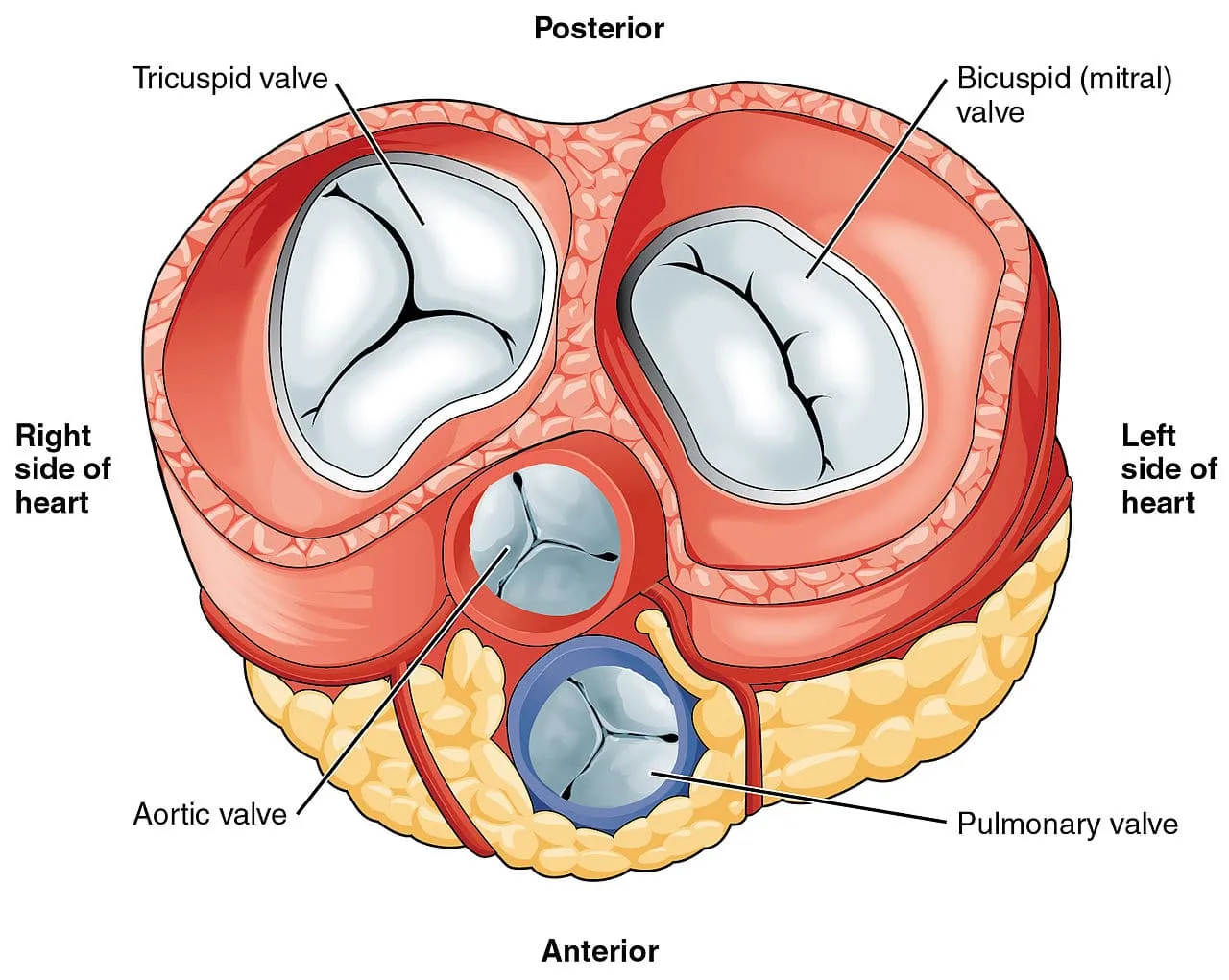
There are four main heart valves: the tricuspid valve, the mitral valve, the pulmonary valve, and the aortic valve. These valves are strategically positioned to direct blood in a coordinated sequence, ensuring that it moves through the heart efficiently.
You can look at valves in a number of different ways. You could look at the right heart valves and the left heart valves OR you could look at the valves as they are related to their position at the atria or venticles. The four valves are:
- The tricuspid valve, located between the right atrium and right ventricle, prevents the backward flow of blood from the ventricle to the atrium during contraction.
- The mitral valve, positioned between the left atrium and left ventricle, serves the same purpose on the left side of the heart.
- The pulmonary valve guards the entrance to the pulmonary artery, preventing the backflow of blood from the pulmonary artery into the right ventricle.
- The aortic valve, situated at the exit of the left ventricle, opens to allow blood to be pumped into the aorta while preventing it from returning to the ventricle.
Valve Functionality
Heart valves operate like gatekeepers, opening and closing in a synchronized manner with each heartbeat.
The opening allows blood to flow through, while the closure prevents regurgitation, maintaining the forward momentum of blood circulation. This rhythmic and precisely timed process is essential for maintaining the heart’s efficiency and preventing potential complications.
Heart valves are also crucial in preventing congestive heart failure. When valves malfunction, allowing blood to flow backward, the heart has to work harder to compensate. This extra strain can lead to an enlarged heart and weakened cardiac muscles, increasing the risk of heart failure over time.
Common Valve Disorders
Your heart valves live a very challenging life. They all have to open and then close in a perfectly time rhythm with your heart pump. That’s 60 times a minute, 60 minutes every hour, 24 hours a day, 365 days a year for, oh… 90 years or so. That’s alot of wear and tear to say the least.
The health of your valves is also diretly related to the health of the rest of your heart. If your heart enlarges or thickens for other reasons, your valve funtion with suffer.
There are many conditions that can affect the health of your heart valves. Valvular diseases can manifest in various forms, including stenosis (narrowing of the valve opening) and regurgitation (leaking of blood backward through the valve). These conditions can be congenital or acquired through factors such as age-related degeneration, infections, or rheumatic fever.
Valvular disorders may cause symptoms such as chest pain, fatigue, shortness of breath, and palpitations. If left untreated, these conditions can progress, causing irreversible damage to the heart and compromising its ability to pump blood effectively.
The left side of your heart works alot harder than the right side of your heart. Your right heart just has to pump a little bit to get blood through your lungs. The left side of your heart has to pump blood to your entire body. This increased work and much higher pressure puts your left sided heart valves (mitral and aortic valves) at higher risk for malfunction, symptoms and poor outcomes.
Heart Murmurs and Valve Testing
The diagnosis of valve disorders often involves a combination of physical examinations and imaging studies.
The old fashioned physical exam is the starting point to assess how your heart valves are funtioning. A heart murmur just means that your doctor can hear with her stethoscope blood flowing through your heart valves. A heart murmur does not mean that your valves are malfunctioning- many times you can hear a murmur in perfectly normal hearts.
The best test to check out the health of your heart valves is an Echo. An Echocardiogram is a non-invasive imaging technique that uses sound waves to create a detailed picture of the heart. Echos are great because they are painless, non-invasive and very accurate at assessing all of your heart valves function.
Cardiac MRI’s are an excellent way to check your valve structure and function but it’s just not a test that is widely available yet.
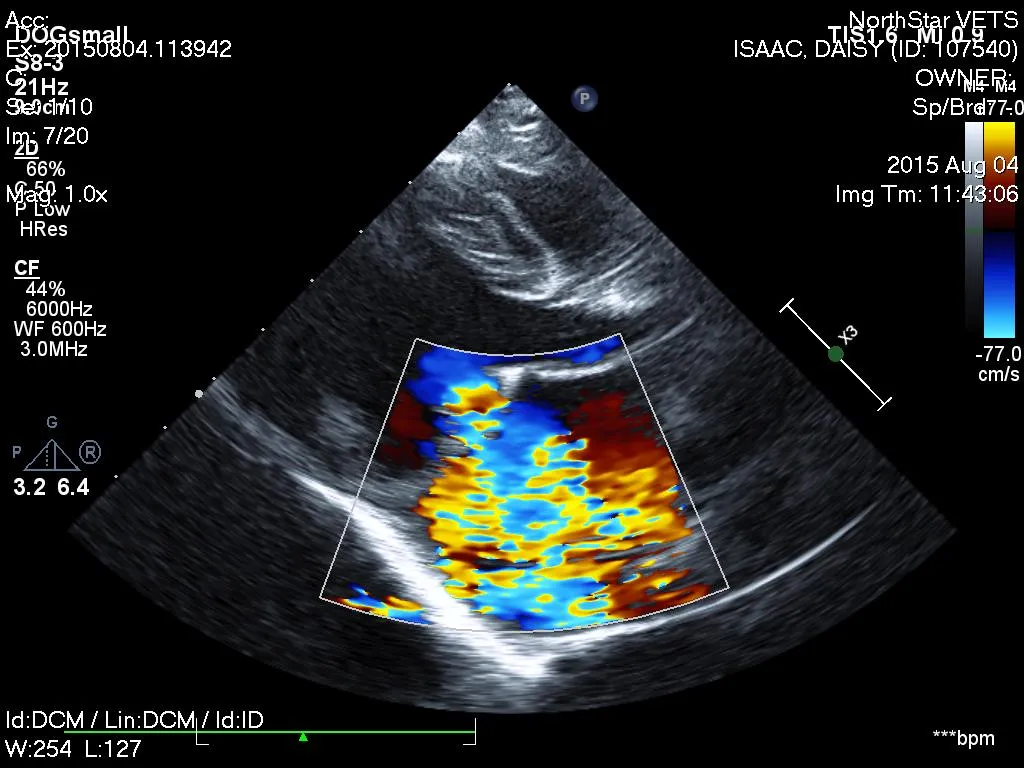
Echo showing mitral valve regurgitation
Conclusion:
In the symphony of the our very complex cardiovascular system, heart valves may be seen as the unsung heroes, orchestrating the harmonious flow of blood through your heart to sustain life.
Their proper functioning is essential for overall health, and any disruption to their delicate balance can have profound consequences.
We just wanted to give you a bit of an overview of your heart valves. Understanding the significance of heart valves and seeking timely medical attention for any symptoms are crucial steps in keeping your heart happy and healthy.